
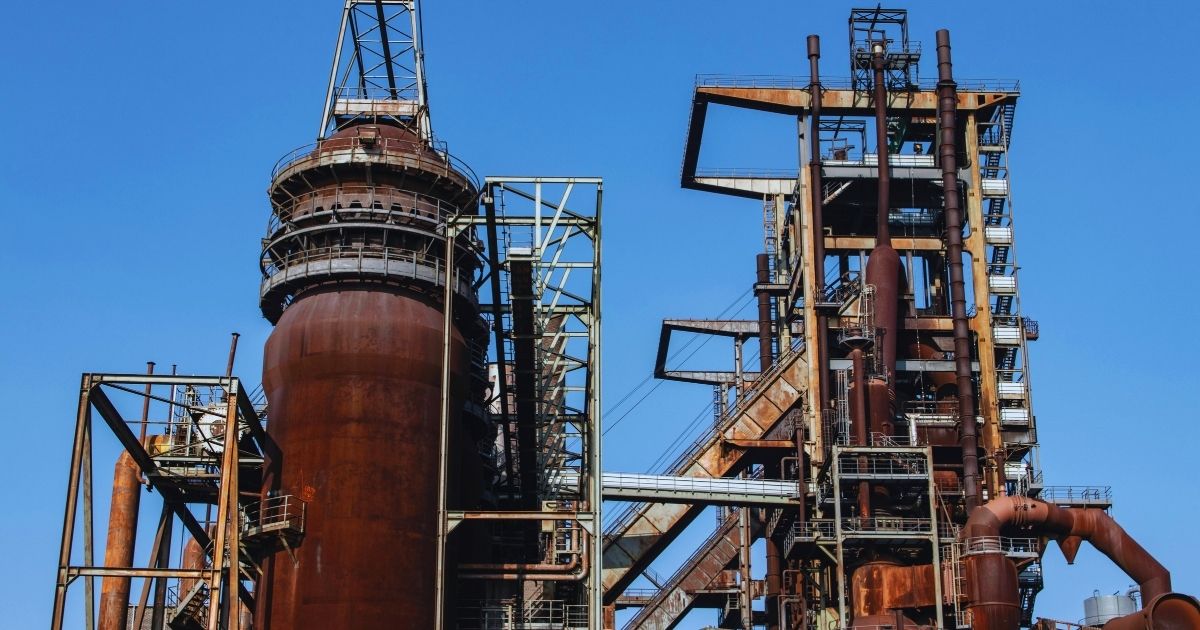
Corrosion remains one of the most costly and serious problems for modern industry and society. Despite this, it consistently fails to be a priority for businesses, policymakers, or the general public. Why is that?
Business turns a blind eye
The corporate world has long prioritized profit over prevention. While companies have embraced frameworks like Environmental Product Declarations and Life Cycle Assessments to project a green image, these tools clearly neglect corrosion behavior — a silent contributor to material waste, energy loss, and environmental damage.
Policymakers remain oblivious
If policymakers don't address corrosion issues to such standards at the highest political level, their role is also poor. The United Nations maintains a calendar of international awareness days covering forests, water, soil, clean air, and even some surprisingly niche topics. Yet corrosion, responsible for trillions of dollars in annual losses and closely linked to resource depletion and emissions, has no place on that list.
Corrosionists are part of the problem
Here lies an uncomfortable truth: those of us working in corrosion are not doing enough to make the case. We keep citing a USD 2.5 trillion annual global cost figure, an estimate from 2013. With global GDP having increased by 58 percent since then, the real figure today is probably closer to USD 4.3 trillion. We owe it to our field and society to communicate with updated, accurate data.
The environmental stakes are enormous
The scale of material production and its consequences is staggering. Annual global material output now exceeds 40 billion tons, generating over 9.4 billion tons of CO₂, with mineral and metal processing accounting for nearly two-thirds of that footprint. Extracting the metals that support our infrastructure requires removing billions of tons of rock each year. Corrosion accelerates the depletion of these finite resources by shortening the lifespans of the structures and systems they form.
A call to action
Leading voices in the field, such as Ingrid Milošev and John R. Scully, and Tomáš Prošek et al., have clearly stated that corrosion science is inseparable from sustainability. Protecting materials is not just an engineering issue; it is an environmental and economic imperative.
Sixty years ago, T.P. Hoar estimated that 20 percent of corrosion costs were avoidable with the knowledge available at the time. Today, that figure should be far higher. We can say 70-80 percent or more. Achieving this requires awareness, education, and collaboration across disciplines and industries.
It's time to act
Engineering materials are no longer just a business concern; their preservation is essential for the sustainable future we owe to our descendants.
International Corrosion Awareness Day (ICAD) is a start. However, the goal should be higher: to declare April as the International Corrosion Awareness Month, as the Corrosionist community's momentum suggests, and ultimately, to establish a permanent place for corrosion on the global sustainability agenda.
Follow the celebration of the International Corrosion Awareness Day 2026 here.